Small-Batch Strawberry Jam Recipe for Two Jars
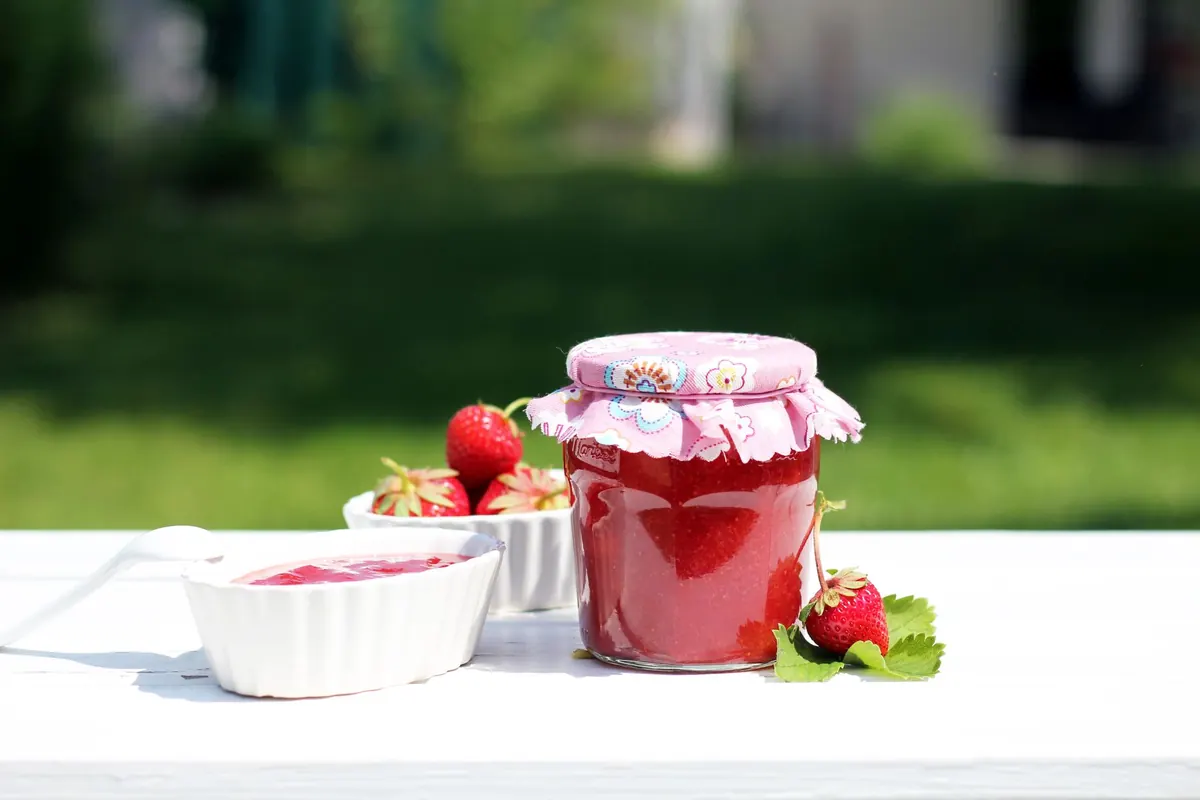
Two punnets of strawberries and a free afternoon is not a reason to go out and buy a preserving pan. It is a reason to make two jars of jam. A small batch reaches setting point in a quarter of the time a big one does, the fruit keeps its colour, and you can stir it without splashing your forearms. You need one wide saucepan, a saucer in the freezer and about forty minutes of attention. This recipe makes exactly two 250 ml jars, plus a couple of spoonfuls for the cook.
Why a smaller batch makes better jam
Most jam recipes assume a glut: three kilos of fruit, a maslin pan, an afternoon of stirring. Water evaporates slowly from a deep pan, so the fruit cooks for an hour or more and ends up tasting of sugar rather than strawberries. Spread the same fruit shallowly in a wide pan and the water goes off quickly, which means the boil is short and the flavour stays bright.
There is a second advantage. Two jars fit on a baking tray, so sterilising stops being an operation and becomes a step. And if the set goes wrong, you have lost 500 g of fruit rather than an entire harvest. The first batch may be slightly loose. You will still eat it.
Equipment and ingredients
Nothing here is specialist. If you have a sauté pan or a deep frying pan with high sides, you have a jam pan.
- A wide, heavy-based saucepan, roughly 20–24 cm across and at least 2 litres deep. Wide matters more than deep: surface area is what drives off water.
- A long wooden spoon or a heatproof spatula.
- A small saucer, kept in the freezer for testing the set.
- A slotted spoon for skimming, and a wide-mouth funnel if you have one.
- A digital thermometer, if you like certainty. An instant-read one is fine.
- Two 250 ml jars with clean lids. New lids are worth the small cost; old ones with scratched sealing rings are the usual reason a jar fails to seal.
- A clean tea towel and a baking tray.
For the jam itself:
- 500 g hulled strawberries, which is about 700 g of fruit in the punnet once the tops are off
- 400 g granulated sugar — or 450 g if your berries are very ripe and watery, or you prefer a firmer set
- 1½ tbsp fresh lemon juice, about 20 ml
- A small knob of butter, optional, for knocking down foam
That is a sugar-to-fruit ratio of 80 per cent, which gives a soft, spoonable jam. Push it to 100 per cent if you want something that holds a clean edge when you cut into it.
The method, step by step
1. Prepare the jars first
Wash the jars and lids in hot soapy water, rinse well and stand them upside down on a clean tea towel to drain. Put the jars on a baking tray in an oven set to 130°C for 15 minutes, then turn the oven off and leave them there. Simmer the lids in a small pan of water for five minutes and leave them in the hot water until you need them — check the lid packaging first, as some modern sealing compounds do not like a hard boil. A hot dishwasher cycle is a reasonable alternative if you time it so the jars are still hot when the jam is ready.
2. Macerate the fruit
Halve or quarter any large strawberries and leave the small ones whole. Tumble them into a bowl with the sugar and lemon juice, stir once, cover and leave for 30 minutes at room temperature. The sugar will pull out a good pool of juice. If you want to do this the night before, put the bowl in the fridge instead; the fruit will hold its shape better, though it will take a minute or two longer to come to the boil.
3. Cook it
Tip everything into the wide pan, including every drop of syrup. Set it over a low heat and stir gently until the sugar has completely dissolved — three or four minutes, with no bubbles breaking the surface. This step matters. If you boil before the sugar is dissolved, you will find gritty crystals in the finished jam.
Now turn the heat up. You want a full rolling boil, one that keeps going when you stir. Cook for 12 to 18 minutes, stirring often and scraping the base of the pan so nothing catches. Skim the pinkish foam off the top with the slotted spoon as it rises; a knob of butter stirred in near the end does the same job chemically, if you prefer.
4. Test the set
Put a teaspoon of jam on the chilled saucer, wait 30 seconds, then push it with your fingertip. If the surface wrinkles and the jam holds a skin, it is ready. If it slides around like syrup, boil for another two minutes and test again. Strawberries are low in pectin, so expect to do this two or three times. If you are using a thermometer, the setting point is 104–105°C — about 4–5°C above the temperature at which water boils where you live, so adjust if you are cooking at altitude.
5. Pot the jars
Take the pan off the heat and let it sit for five minutes, then stir and skim once more. That short rest stops the fruit from floating to the top of the jar. Ladle the jam into the hot jars, leaving about 5 mm of headspace, wipe the rims with a clean damp cloth, and screw the lids on firmly but not brutally tight. For shelf-stable jars, process them in a boiling water bath for 10 minutes. If you would rather not, let them cool and keep them in the fridge.
Troubleshooting
The jam is still runny after cooling
Strawberries are genuinely low in pectin, so a soft set is normal. If it is looser than you want, tip it back into the pan and boil for two-minute bursts, testing in between. Next time, add a handful of redcurrants or one grated apple at the start — both are high in pectin and disappear into the flavour. More lemon juice also helps, and so does using slightly underripe fruit.
The jam is rubbery or too firm
You boiled it past the setting point, or used too much sugar. You cannot undo it in the pan, but when you open a jar you can loosen the whole thing by stirring in a spoonful of boiling water.
Foam, or fruit that floats
Skim foam patiently, or add the butter. For floating fruit, the five-minute rest before potting is the fix — stir the jam properly at that point and the pieces stay suspended.
Mould on the surface
Throw the jar away. Do not scrape the mould off and eat the rest. Mould means the seal failed, the jar was not clean, or the jam was stored somewhere warm and damp.
Four ways to change it up
- Vanilla and black pepper. Split a vanilla pod into the pan with the fruit, and grind a little black pepper over the finished jam. Sounds odd; tastes like strawberries amplified.
- Rose and cardamom. A teaspoon of rose water and three bruised cardamom pods, fished out before potting.
- Balsamic. A tablespoon added in the last two minutes of boiling gives a darker, sharper jam that is very good with cheese.
- Mint. A small handful of chopped mint stirred in after the pan comes off the heat, for a jam that belongs on lamb or in a jug of iced tea.
Storing the two jars
Properly sealed and water-bath processed, these jars keep for up to a year in a cool, dark cupboard. Once opened, they live in the fridge and are best eaten within three to four weeks. If you skipped the water bath, treat them as fresh: refrigerate from the start and finish them within a month. Label the lids with the date and the flavour, especially if you make the peppered one.
Two jars is a good amount to give one away and keep one for yourself. Serve it thickly on toast, spoon it over yoghurt, or warm a little and pour it over vanilla ice cream, where a soft set is an advantage rather than a fault. Make it once, note what your fruit did, and the next batch will be better.
Photo: K Zoltan / Pexels