Beginner's Guide to Building an Artisan Pantry from Scratch
A good pantry isn't a shelf of expensive jars. It's the short list of things that let you cook dinner on a Wednesday without going to the shop, plus a handful of bottles and bags that quietly make everything taste better. Most of us build it backwards — buying the interesting things first and the useful things last — and end up with three vinegars we never open and no plain rice.
Here's a more sensible order.
Start With What You Actually Cook
Before buying anything, spend a week noticing. What do you make when you're tired? What do you make when people come over? If your cooking leans towards pasta, roast vegetables and traybakes, your pantry should lean Mediterranean. If you cook a lot of South Asian food, your money is better spent on ghee, mustard oil, whole spices, good basmati and tinned tomatoes than on a bottle of balsamic you'll use twice.
Write down the ten meals you cook most often, then list the ingredients they share. That shared list is your pantry. Everything else is a guest.
Oils: Buy Two Properly, Then Branch Out
Oils are where beginners both overspend and underspend, and where a lot of money quietly goes off.
The working oil
You need one neutral, high smoke point oil for frying, roasting and baking. Rapeseed, sunflower and groundnut all do the job. Buy a size you'll finish within a couple of months — a big bottle of something you use daily is better value than a small pretty bottle you ration.
The finishing oil
Then one good extra virgin olive oil for dressings, drizzling and gentle cooking. Keep it out of the light and away from the hob; heat and sun make it taste flat and waxy. Buy smaller bottles more often rather than a litre you'll still have next winter.
Everything else, later
Toasted sesame oil, coconut oil, ghee, a chilli oil you like, maybe a good nut oil for salads. Add these one at a time, as your cooking asks for them. There's no prize for owning eleven oils, but there is a real cost to pouring four of them away.
Vinegars: The Cheapest Flavour Upgrade You Can Buy
If you only keep two, make them cider vinegar (or white wine vinegar) and red wine vinegar. Between them they cover dressings, quick pickles, marinades and the splash at the end of a stew that makes people ask what you did.
Add a mid-range balsamic when you want sweetness in roasting or on tomatoes — the very cheap bottles are mostly coloured and sweetened, and the genuinely aged ones belong on a different shopping list. Rice vinegar and sherry vinegar are worth space if you cook the food that calls for them.
A dressing is roughly three parts oil to one part vinegar, a pinch of salt and a teaspoon of mustard. Learn that ratio and you'll stop buying dressing in bottles.
Grains and Dried Goods: Buy at the Speed You Eat
The core
- One rice you actually cook — basmati, long grain, or a short grain for puddings and risotto.
- Two pasta shapes: one long, one short and saucy.
- Plain flour, oats, and a bag of couscous or bulgur.
- Dried lentils — cheap, quick, no soaking. Green or Puy for salads, red for dal and soup.
The second wave
Polenta, pearl barley, noodles, and dried beans if you plan ahead — tinned beans if you don't, with no shame attached. Whole grains go stale faster than white ones: brown rice and wholemeal flour have a shorter useful life, so buy them in smaller amounts and keep them cool and dark.
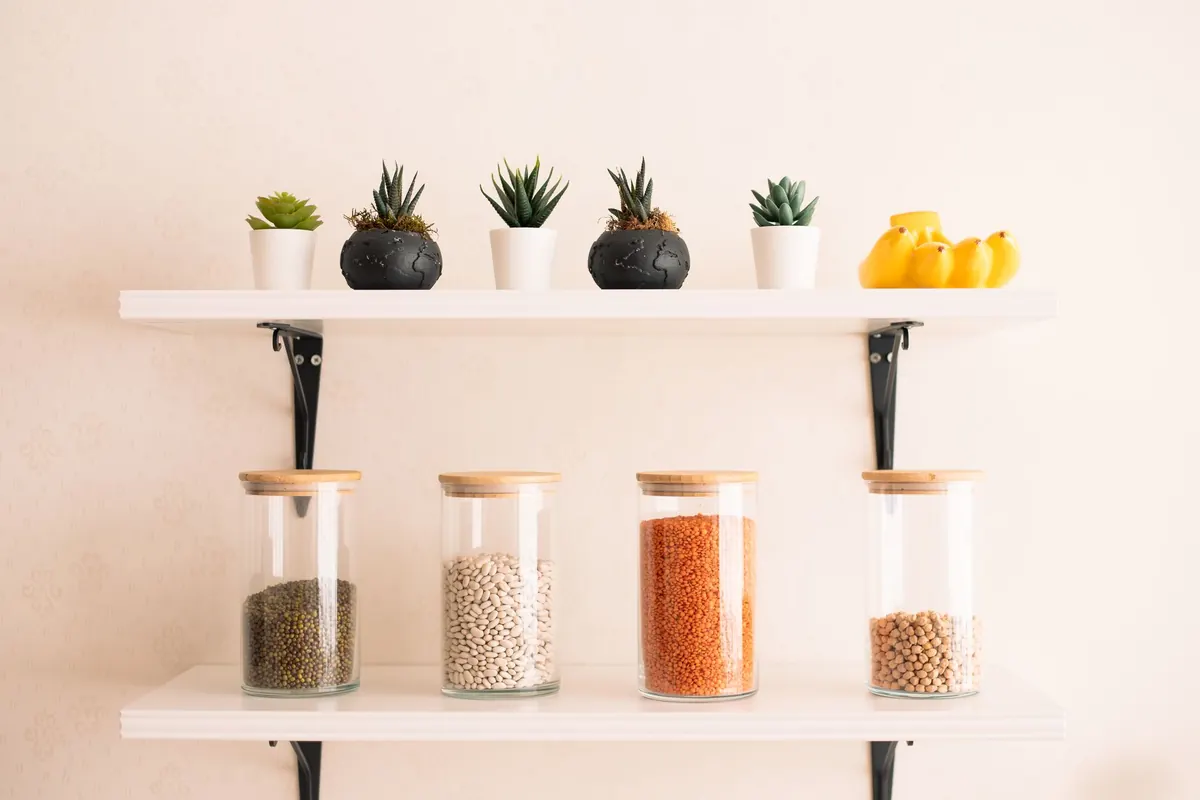
Decanting into glass jars helps you see what you have, and a date written on the lid helps you trust it. The point isn't a photogenic shelf. It's knowing at a glance whether you need rice before you leave the house.
Flavour Bases: The Shelf That Does the Heavy Lifting
Salt, first
Two salts: a fine one for cooking water and baking, and a flaky one for finishing. This single upgrade improves more meals than any jar of something fashionable.
The umami shelf
Soy sauce, fish sauce, miso, tomato paste in a tube, anchovies or anchovy paste, stock paste or cubes, Dijon mustard, capers, olives, tinned tomatoes. These are the ingredients that make a ten-minute sauce taste like it simmered for an hour. Choose one or two from each family and use them until they're empty.
Aromatics and spices
Onions, garlic, ginger. Buy more ginger than you need and freeze the rest — it grates straight from frozen. A grinder of black peppercorns, dried chillies, cumin and coriander cover most everyday cooking. Buy whole spices where you can and grind them as you go; ground spices fade within months, so small packets beat giant ones.
How to Grow the Collection Without Waste
A pantry built in one enthusiastic afternoon is usually a pantry full of things you don't know how to use. Grow it instead.
- Buy one new item at a time, and cook with it twice before buying the next.
- Match size to use: small jars for anything measured by the teaspoon, bulk only for genuine daily staples.
- Write the date on the lid the day you open something.
- Keep a running list of what you've run out of, not what looked appealing in the shop.
- Cook from the pantry deliberately once a week. It shows you what's missing and what's been sitting there.
- Replace rather than accumulate: when the soy sauce is finished, that's the moment to try a different one.
On money: spreading this over a year, a couple of items a week, costs less than one grand restock and gives you time to learn each thing. If you have allergies, intolerances or a medical condition that affects what you eat, take advice from a qualified professional rather than a pantry list.
Your First Shop
Starting from nothing, buy this and cook from it for a fortnight before adding anything else:
- A neutral cooking oil and one good olive oil
- Cider vinegar and red wine vinegar
- Fine salt, flaky salt, black peppercorns
- Rice, two pasta shapes, lentils, plain flour
- Tinned tomatoes, tomato paste, soy sauce, Dijon mustard, stock paste
- Onions, garlic, ginger, dried chillies
Then wait. A pantry gets good not when it's full, but when you know it by heart — when you can open the cupboard, see six things and know exactly what dinner is.
Photo: Gülşah Tüfekçi / Pexels